
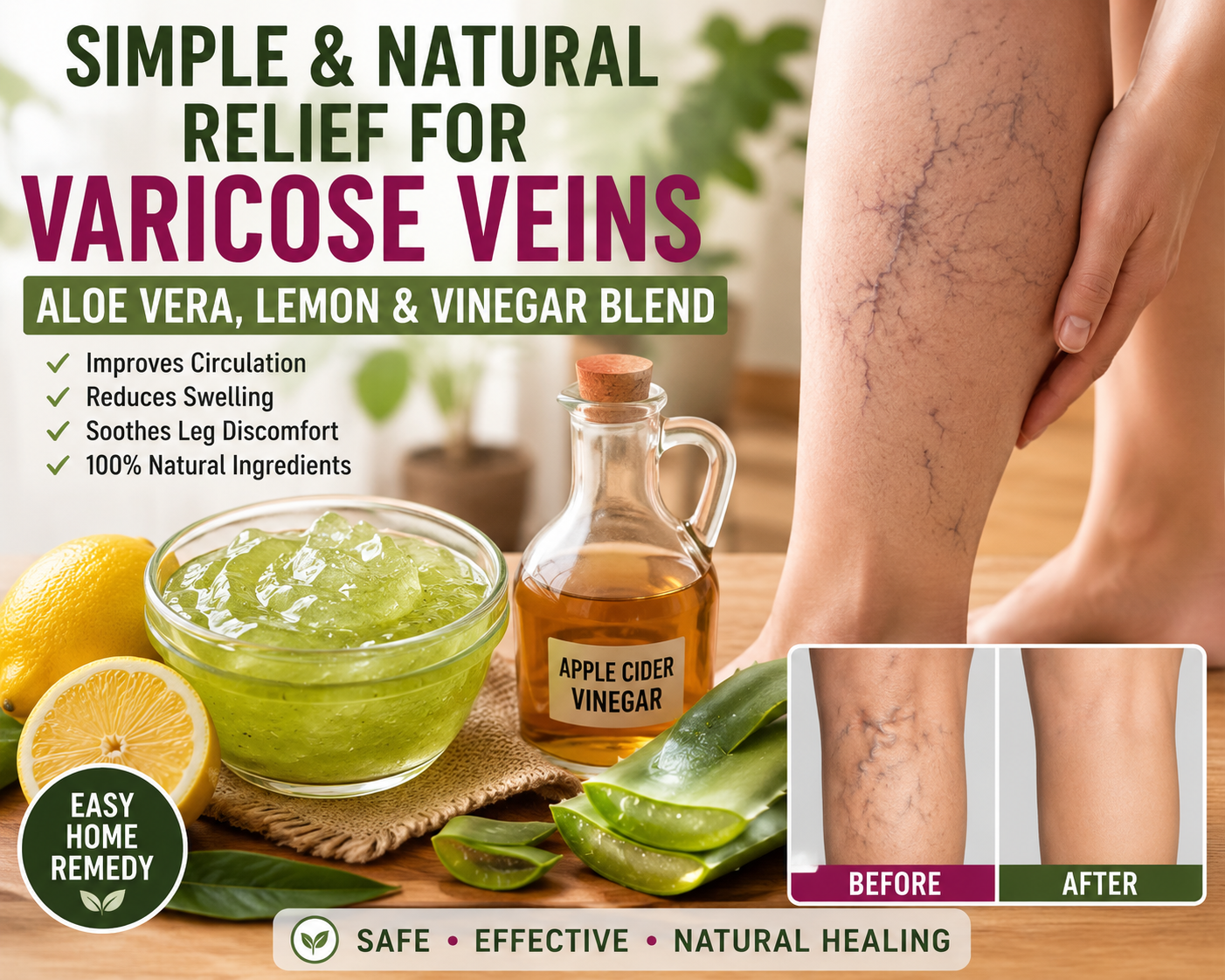
Simple and Natural Relief for Varicose Veins: Aloe Vera, Lemon & Vinegar Blend
Varicose veins are one of the most common vascular conditions affecting adults worldwide, and many people search for a simple, natural varicose veins remedy before considering more invasive options. Those swollen, twisted, bluish-purple veins that appear just beneath the surface of the skin — most often on the legs and ankles — are more than a cosmetic concern. For millions of people, they bring daily discomfort: aching legs, a constant feeling of heaviness, throbbing pain after long hours of standing, persistent swelling, and irritating itchiness. While medical procedures such as laser therapy, sclerotherapy, or surgical stripping exist, they can be expensive, invasive, and not always accessible.
The good news is that nature offers some genuinely effective tools to manage varicose vein symptoms at home. One of the most popular and time-tested natural remedies is a blend of three powerhouse ingredients: aloe vera gel, fresh lemon juice, and apple cider vinegar. Each brings its own therapeutic properties, and together they form a synergistic topical treatment that can visibly reduce inflammation, improve local circulation, and soothe irritated skin over time. In this guide, we will walk you through everything you need to know — the science behind each ingredient, a step-by-step recipe, application instructions, and lifestyle tips to support your vein health from the inside out.
Understanding Varicose Veins: What Causes Them?
Veins carry deoxygenated blood from the body back toward the heart. They rely on tiny internal valves that open and close with each heartbeat to keep the blood moving in the right direction. When these valves weaken or become damaged — due to prolonged standing, excess weight, pregnancy, genetics, or a sedentary lifestyle — blood begins to pool inside the vein. Over time, the pooled blood causes the vein walls to stretch outward and twist, creating the characteristic appearance of varicose veins.
Beyond their appearance, varicose veins can cause a range of symptoms including leg cramps, skin discoloration, dry or flaky skin around the affected area, and in advanced cases, skin ulcers or blood clots. Managing these symptoms early through both lifestyle adjustments and targeted natural remedies can make a significant difference in quality of life — and that is exactly where the aloe vera, lemon, and vinegar blend shines.
The Three Star Ingredients and Their Benefits
🌿 Aloe Vera Gel — The Ultimate Skin Soother
Aloe vera has been used medicinally for over 5,000 years, and modern science continues to validate what ancient healers already knew. The gel extracted from fresh aloe vera leaves contains more than 75 bioactive compounds, including vitamins A, C, and E, minerals such as magnesium and zinc, enzymes, amino acids, and a range of polysaccharides with documented anti-inflammatory effects. When applied topically to varicose vein areas, aloe vera works on multiple levels simultaneously.
First, it reduces local inflammation by inhibiting the production of prostaglandins and cytokines, the chemical messengers that trigger swelling and pain. Second, aloe vera has natural vasodilating properties that help improve blood flow in the small capillaries just beneath the skin, encouraging better circulation in the affected area. Third, its deep moisturizing effect prevents the dry, cracked, itchy skin that frequently develops around varicose veins. Finally, aloe vera’s immediate cooling sensation provides fast relief from the burning and throbbing discomfort that many people experience, especially in hot weather.
🍋 Fresh Lemon Juice — Vascular Strength in Every Drop
Lemon juice is far more than a kitchen staple. It is a concentrated source of Vitamin C (ascorbic acid), one of the most essential nutrients for vascular health. Vitamin C plays a critical and irreplaceable role in the synthesis of collagen and elastin — the two structural proteins that give vein walls their strength, flexibility, and ability to resist pressure. Without adequate Vitamin C, vein walls become fragile and lose their elasticity, making them far more vulnerable to the pooling and stretching that causes varicose veins.
Lemon juice also functions as a natural astringent, meaning it helps tighten and tone the skin and underlying tissues when applied topically. This toning effect can gradually reduce the visual prominence of surface varicose veins over time. Additionally, lemon contains flavonoids — particularly hesperidin and diosmin — which are the same compounds found in many prescription vein-health supplements, and have been clinically studied for their ability to strengthen capillary walls and reduce venous insufficiency symptoms.
🍶 Apple Cider Vinegar — The Circulation Booster
Apple cider vinegar (ACV) is one of the most widely studied and trusted natural remedies in folk medicine, and its application to varicose veins is particularly well-supported by user evidence and emerging research. ACV is rich in acetic acid, malic acid, potassium, and naturally occurring enzymes that work together to improve circulation and reduce venous congestion. According to Healthline’s review of apple cider vinegar for varicose veins, when applied topically it is believed to act as a natural vasodilator, improving local blood flow and reducing the pressure that causes veins to bulge.
ACV also has potent anti-inflammatory and antimicrobial properties that help soothe irritated skin and protect areas around the veins from secondary infection, especially where scratching has broken the skin surface. Many people who use ACV consistently for four to six weeks report noticeable reductions in swelling, a visible decrease in the prominence of surface veins, and significant relief from the heaviness and discomfort associated with varicose veins.
How to Prepare the Aloe Vera, Lemon & Vinegar Blend
This remedy requires only a few minutes to prepare and uses ingredients you likely already have at home. For best results, always use fresh aloe vera gel directly from the plant, freshly squeezed lemon juice rather than bottled, and raw, unfiltered apple cider vinegar with the “mother” — the cloudy sediment that contains most of ACV’s beneficial enzymes and probiotics.
What You Will Need
- 3 tablespoons of fresh aloe vera gel (scoop from a freshly cut leaf)
- 1 tablespoon of fresh lemon juice (approximately half a medium lemon)
- 1 tablespoon of raw, unfiltered apple cider vinegar (with the mother)
- Optional: 3–4 drops of cypress essential oil (known for its venotonic properties)
- Optional: 3–4 drops of lavender essential oil for added anti-inflammatory and calming effect
- A small clean bowl and a spoon or mini whisk
- A sealed glass jar for storage
Step-by-Step Preparation
- Cut a thick, mature aloe vera leaf near its base. Stand it upright for 10–15 minutes to allow the yellow aloin (a latex compound that can be irritating) to drain out completely.
- Slice the leaf open lengthwise and use a spoon to scoop out 3 tablespoons of the clear inner gel into your bowl.
- Squeeze half a medium lemon directly into the bowl, making sure to remove any seeds.
- Add 1 tablespoon of raw apple cider vinegar to the mixture.
- Add your essential oils if using, then stir or whisk all ingredients together until you achieve a smooth, slightly runny consistency.
- Transfer any unused portion to a sealed glass jar and refrigerate for up to 48–72 hours. The blend is most potent when freshly made.
How to Apply the Blend for Maximum Results
- Wash and dry the affected leg area thoroughly. Clean skin allows for deeper penetration of the active compounds.
- Apply the blend generously over and around the varicose veins using clean fingertips or a soft cotton pad.
- Massage in slow, gentle upward strokes — always moving from the ankle toward the knee, then from the knee toward the thigh. This direction supports venous return and encourages blood to flow back toward the heart rather than pooling further.
- Leave the blend on for 20–30 minutes. During this time, elevate your legs above heart level by lying down and resting them on two or three pillows. This position takes pressure off the veins and maximizes the drainage effect.
- Rinse with cool or lukewarm water — never hot, as heat dilates veins and worsens symptoms.
- Repeat once or twice daily, ideally in the evening before bed when your legs have been active all day. Most users begin noticing results within 3–6 weeks of consistent application.
Important Safety Tips Before You Start
- Always perform a patch test first. Apply a small amount of the blend to the inside of your wrist and wait 24 hours. If you notice redness, itching, or burning, discontinue use or reduce the amount of lemon juice.
- Avoid sun exposure immediately after application. Lemon juice is photosensitizing — applying it and then going into direct sunlight can cause skin darkening or irritation. Apply at night or cover the area.
- Do not apply to broken or ulcerated skin. If your varicose veins have caused skin breakdown or open sores, consult a healthcare professional before using any topical remedy.
- This is a complementary remedy, not a medical treatment. If you experience sudden severe pain, warmth, redness, or hardness in the area of a varicose vein, seek medical attention immediately as these can be signs of a blood clot (deep vein thrombosis).
Lifestyle Habits That Boost Your Results
The blend works best as part of a broader approach to vein health. According to Medical News Today’s comprehensive guide on varicose veins, several daily habits can meaningfully slow the progression of the condition and enhance the effects of natural topical treatments.
- Move regularly: Walking, swimming, and cycling activate the calf muscles — your body’s natural “venous pump” — which push blood back up toward the heart against gravity.
- Elevate your legs daily: Spend at least 15–20 minutes each day with your legs raised above heart level. Even doing this while watching television makes a real difference over time.
- Wear graduated compression stockings: These apply gentle external pressure that supports the vein walls and dramatically reduces pooling. They are especially helpful if you stand or sit for long periods.
- Eat for vein health: Focus on anti-inflammatory foods rich in flavonoids, Vitamin C, and fiber. Berries, citrus fruits, leafy greens, garlic, and ginger are all excellent choices. Reduce your intake of salt, processed foods, and refined sugars, which promote water retention and inflammation.
- Stay hydrated: Adequate hydration keeps blood from becoming too viscous (thick), which reduces the strain on vein valves.
- Maintain a healthy weight: Excess body weight increases the pressure on the veins of the lower body, accelerating valve damage over time.
- Avoid prolonged heat exposure: Hot baths, saunas, and direct sun on the legs all cause veins to dilate and worsen symptoms. Choose cool or lukewarm showers instead.
When to See a Doctor
While this natural remedy is safe and beneficial for the vast majority of people with mild to moderate varicose veins, there are situations where professional medical evaluation is essential. The NHS official guide on varicose vein treatments outlines several scenarios that require prompt medical attention: if your varicose veins are causing severe or worsening pain, if you notice skin ulcers or significant discoloration around the veins, if you experience sudden swelling in one leg, or if a vein becomes hard, warm, and tender to the touch. In these cases, a phlebologist or vascular specialist can offer evidence-based treatments including endovenous laser ablation, foam sclerotherapy, or other minimally invasive procedures.
Final Thoughts
Living with varicose veins does not have to mean living with constant discomfort. The aloe vera, lemon, and apple cider vinegar blend is a gentle, affordable, and genuinely effective natural remedy that addresses the core issues — inflammation, poor circulation, and weakened skin — with ingredients backed by both traditional use and emerging scientific research. It will not eliminate varicose veins overnight, but with consistent use alongside a vein-friendly lifestyle, most people experience meaningful relief within four to six weeks. Start small, be consistent, and listen to your body. Your legs have carried you through everything — now it is time to take care of them. 🌿💚
Disclaimer: This article is for informational purposes only and does not constitute medical advice. Always consult a qualified healthcare professional before starting any new health regimen, especially if you have underlying medical conditions.