How to Store Fresh Herbs Properly: Keep Herbs Fresh Longer with These Easy Tips
By Easy Cooking 4You
Knowing how to store fresh herbs properly can instantly elevate the flavor of any dish and help your fresh herbs, from salads and soups to pasta, grilled meats, and homemade sauces. However, many home cooks struggle with keeping herbs fresh for more than a few days. If you’ve ever opened your refrigerator only to find wilted parsley, slimy cilantro, or dried-out basil, you’re not alone.
Learning how to store fresh herbs properly can save money, reduce food waste, and ensure you always have flavorful ingredients ready for your favorite recipes. In this complete guide, you’ll discover the best methods for storing different types of herbs, common mistakes to avoid, and practical tips to maximize freshness.
Why Learning How to Store Fresh Herbs Properly Matters
Fresh herbs are delicate and highly perishable. Improper storage can cause them to lose moisture, flavor, texture, and nutritional value within days.
Benefits of proper herb storage include:
- Longer shelf life
- Better flavor retention
- Reduced food waste
- Cost savings
- Convenient meal preparation
Whether you grow herbs at home or purchase them from the grocery store, proper storage techniques can significantly extend their freshness.
How to Store Fresh Herbs Properly for Soft Herbs
Not all herbs should be stored the same way. Herbs generally fall into two categories:
Soft Herbs
Soft herbs have tender stems and leaves.
Examples include:
- Parsley
- Cilantro
- Dill
- Mint
- Chervil
These herbs require moisture to stay fresh.
Hardy Herbs
Hardy herbs have woody stems and thicker leaves.
Examples include:
- Rosemary
- Thyme
- Sage
- Oregano
- Marjoram
These herbs prefer less moisture and slightly drier conditions.
Understanding the difference is essential for proper storage.
How to Store Fresh Herbs Properly for Hardy Herbs
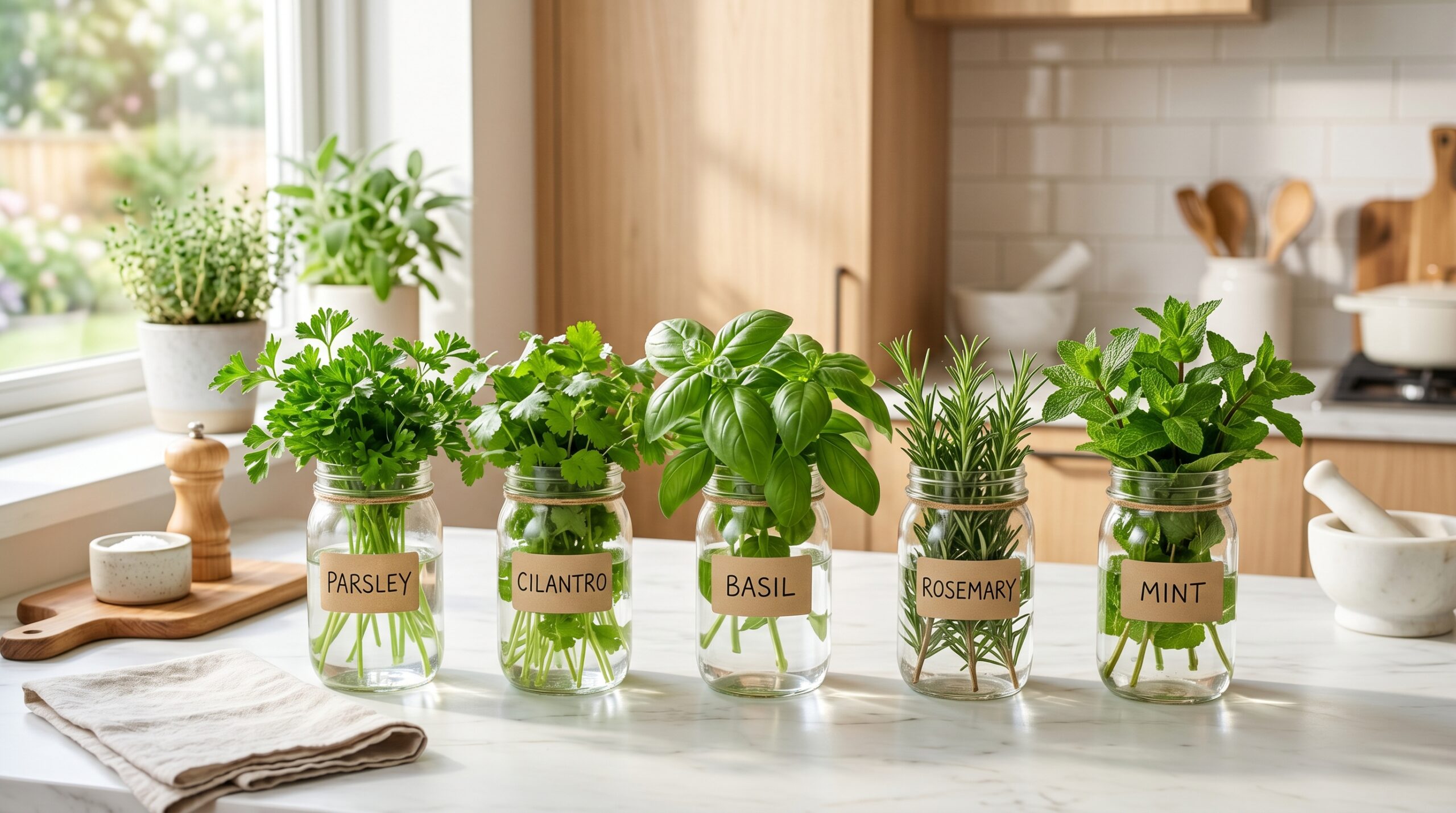
Method 1: Store Like Fresh Flowers
This is one of the most effective methods for extending freshness.
What You’ll Need
- Glass jar or mason jar
- Fresh water
- Plastic bag
Instructions
- Trim the herb stems slightly.
- Fill a jar with about 1 inch of water.
- Place herbs upright in the jar.
- Loosely cover with a plastic bag.
- Store in the refrigerator.
This method works exceptionally well for:
- Parsley
- Cilantro
- Dill
Using this technique can keep herbs fresh for up to two weeks.
How to Store Mint Properly
Mint tends to wilt quickly if not stored correctly.
Best Method
- Place mint stems in a jar of water.
- Cover loosely with a plastic bag.
- Refrigerate immediately.
Replace the water every few days for maximum freshness.
How to Store Basil Properly
Basil is unique because refrigeration can damage its delicate leaves.
Correct Storage Method
- Trim the stems.
- Place basil in a glass of water.
- Keep at room temperature.
- Avoid direct sunlight.
- Change water every 2 days.
Think of basil as a bouquet of flowers rather than a refrigerated vegetable.
Properly stored basil can remain fresh for up to one week.
How to Store Hardy Herbs Properly
Hardy herbs require a different approach.
Method 1: Damp Paper Towel Technique
Instructions
- Lightly dampen a paper towel.
- Wrap herbs loosely.
- Place inside a resealable bag.
- Store in the refrigerator crisper drawer.
This method works well for:
- Rosemary
- Thyme
- Sage
- Oregano
Many hardy herbs can remain fresh for two to three weeks using this technique.
Should You Wash Herbs Before Storing?
Many people automatically wash herbs after bringing them home.
However, washing before storage isn’t always recommended.
Best Practice
If herbs are clean:
- Store them dry.
- Wash only before use.
If herbs are dirty:
- Rinse gently.
- Dry thoroughly using a salad spinner or paper towels.
- Ensure no excess moisture remains.
Excess moisture is one of the primary causes of spoilage.
Common Mistakes That Ruin Fresh Herbs
Avoid these common storage mistakes:
1. Storing Wet Herbs
Moisture encourages mold growth and bacterial spoilage.
2. Using Airtight Containers Without Airflow
Herbs need some air circulation to stay fresh.
3. Refrigerating Basil
Cold temperatures cause basil leaves to turn black and lose flavor.
4. Forgetting to Change Water
If using the jar method, fresh water is essential.
5. Crushing Herbs
Avoid overcrowding herbs in storage containers.
Gentle handling preserves texture and flavor.
How Long Do Fresh Herbs Last?
Here’s a general guide:
| Herb | Storage Method | Expected Freshness |
|---|---|---|
| Parsley | Jar with water | 10-14 days |
| Cilantro | Jar with water | 10-14 days |
| Dill | Jar with water | 7-14 days |
| Mint | Jar with water | 10-14 days |
| Basil | Water at room temperature | 5-7 days |
| Rosemary | Damp towel | 2-3 weeks |
| Thyme | Damp towel | 2-3 weeks |
| Sage | Damp towel | 2-3 weeks |
| Oregano | Damp towel | 2-3 weeks |
Storage conditions may vary depending on freshness at purchase.
Can You Freeze Fresh Herbs?
Absolutely.
Freezing is an excellent option when you have more herbs than you can use.
Method 1: Herb Ice Cubes
- Chop herbs finely.
- Fill ice cube trays.
- Add olive oil or water.
- Freeze.
- Transfer cubes to freezer bags.
Perfect for soups, stews, sauces, and sautés.
Method 2: Freezer Bags
- Wash and dry herbs completely.
- Place in freezer bags.
- Remove excess air.
- Freeze.
This method works especially well for parsley, cilantro, and dill.
How to Dry Fresh Herbs
Drying herbs is another excellent preservation method.
Air-Drying Method
- Bundle herbs together.
- Tie stems with string.
- Hang upside down.
- Store in a dry, well-ventilated area.
Best herbs for drying include:
- Rosemary
- Thyme
- Sage
- Oregano
Once fully dried, store in airtight containers away from heat and light.
Signs Your Herbs Have Gone Bad
Discard herbs if you notice:
- Slimy leaves
- Strong unpleasant odor
- Mold growth
- Black spots
- Excessive wilting
Using spoiled herbs can negatively affect the flavor and quality of your dishes.
Pro Tips for Keeping Herbs Fresh Longer
Buy Fresh Herbs Carefully
Choose herbs that are:
- Bright green
- Fragrant
- Free from yellowing
- Free from slimy stems
Store Immediately
Don’t leave herbs sitting on the counter for hours after shopping.
Use Proper Containers
Glass jars often outperform plastic containers because they allow better airflow and moisture control.
Rotate Regularly
Use older herbs first to reduce waste.
Final Thoughts
Knowing how to store fresh herbs properly can make a huge difference in your kitchen. Whether you’re preserving parsley, cilantro, basil, rosemary, or mint, using the correct storage method helps maintain freshness, flavor, and nutritional value for much longer.
By treating soft herbs like flowers, keeping basil at room temperature, and wrapping hardy herbs in damp paper towels, you’ll enjoy fresher ingredients, waste less food, and save money on grocery trips.
Next time you bring home a bundle of herbs, use these simple storage techniques and enjoy vibrant flavors in every meal.