How to Stock a Healthy Kitchen Pantry on a Budget
Why a Well-Stocked Pantry Is the Secret to Eating Well on a Budget
One of the biggest myths about building a healthy pantry on a budget is that it has to be expensive. In reality, the people who eat the healthiest on the smallest budgets almost always have one thing in common: a smart, well-organized pantry. When your shelves are stocked with versatile, nutrient-dense staples, you can throw together a balanced meal in minutes without an expensive last-minute grocery run.
According to the U.S. Department of Agriculture, planning meals around affordable, nutrient-dense staples is one of the most effective strategies for maintaining a healthy diet while keeping food costs under control. This guide will walk you through exactly what to buy, how much to spend, and how to organize it all so nothing goes to waste.
The Building Blocks of a Healthy, Budget-Friendly Pantry
Rather than buying random ingredients for individual recipes, think in categories. A pantry built around these five categories can produce dozens of different healthy meals without ever feeling repetitive.
1. Whole Grains and Starches
- Brown rice or white rice (sold in bulk, this is one of the cheapest calorie sources available)
- Rolled oats (great for breakfast and baking, and significantly cheaper than packaged cereal)
- Whole wheat pasta
- Dried or canned potatoes
- Whole grain bread (or flour to make your own)
2. Budget-Friendly Proteins
- Dried beans and lentils (some of the cheapest protein sources per serving that exist, and they store almost indefinitely)
- Canned beans (chickpeas, black beans, kidney beans) for when you need something fast
- Canned tuna or salmon
- Eggs (a complete protein that is almost always one of the most affordable options at the grocery store)
- Peanut butter or other nut butters
3. Healthy Fats and Oils
- A neutral cooking oil like vegetable or canola oil for everyday high-heat cooking
- Olive oil for dressings, finishing dishes, and lower-heat cooking
- A bag of mixed nuts or seeds for snacking and adding crunch to meals
If you are unsure which oil to use for which cooking method, our Best Cooking Oils Explained guide breaks down smoke points and the best uses for each type so you are not wasting money on the wrong oil for the job.
4. Canned and Frozen Vegetables and Fruits
- Canned tomatoes (diced, crushed, and whole, since they form the base of countless sauces and soups)
- Frozen mixed vegetables (often more nutrient-dense than fresh, since they are flash-frozen at peak ripeness)
- Frozen berries for smoothies and oatmeal toppings
- Canned corn and canned green beans as easy side dish staples
5. Flavor Builders
- Garlic and onions (cheap, long-lasting, and the flavor base of an enormous number of recipes)
- A basic spice rack: salt, black pepper, garlic powder, onion powder, paprika, cumin, and dried oregano cover the vast majority of recipes
- Low-sodium chicken or vegetable broth (or bouillon cubes, which are even more affordable and shelf-stable)
- Vinegar (white or apple cider) for quick acidity in dressings and marinades
Smart Shopping Strategies to Stretch Your Budget
- Buy in bulk when possible. Rice, oats, beans, and lentils are dramatically cheaper per serving when purchased in larger quantities, and they store for months or even years
- Choose store brands over name brands. Generic versions of canned goods, grains, and spices are usually nutritionally identical at a fraction of the cost
- Buy frozen produce when fresh is out of season or expensive. Frozen fruits and vegetables retain most of their nutrients and dramatically reduce food waste since they do not spoil
- Watch unit prices, not just the sticker price. A larger package is not always cheaper per ounce, so always compare the unit cost printed on the shelf tag
- Plan your meals around what is on sale rather than building a rigid shopping list first and hoping for discounts
Sample Budget Pantry Shopping List (Approximate Monthly Cost)
While exact prices vary by region and store, a basic version of this pantry can typically be built and maintained for around $60 to $90 per month for a single person, based on average grocery pricing data. The USDA Economic Research Service Food Price Outlook tracks national grocery price trends and is a useful resource for understanding how staple food costs shift throughout the year.
- 5 lb bag of rice: $5 to $8
- 1 lb bag of dried lentils or beans: $1.50 to $3
- Dozen eggs: $3 to $5
- Canned beans (4-pack): $4 to $6
- Canned tomatoes (4-pack): $4 to $6
- Peanut butter (large jar): $4 to $6
- Frozen mixed vegetables (large bag): $4 to $6
- Rolled oats (large container): $4 to $6
- Cooking oil: $5 to $8
- Basic spices (one-time purchase, lasts months): $10 to $15
How to Organize Your Pantry to Avoid Waste
- Practice “first in, first out” by placing newer items behind older ones so nothing gets forgotten and expires unused
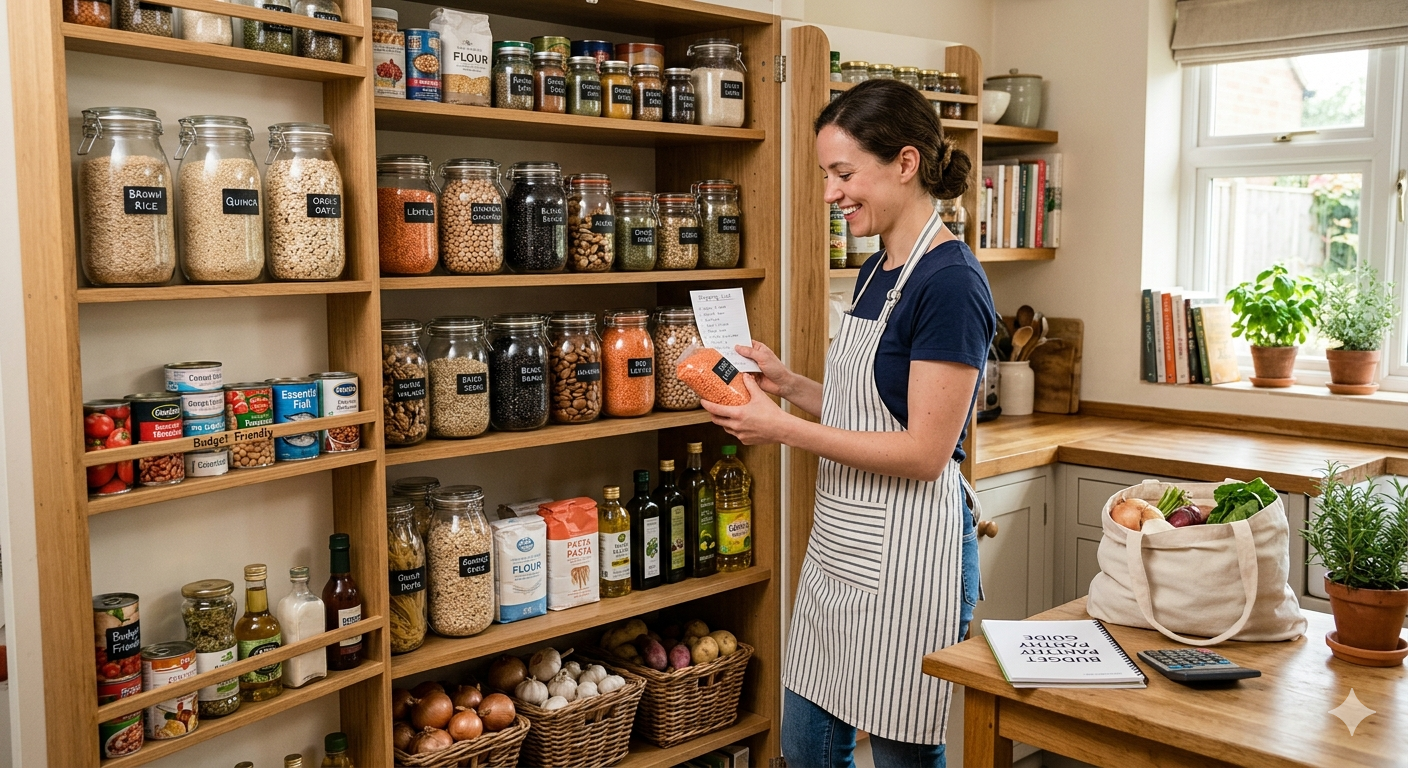
- Use clear, labeled containers for bulk items like rice, oats, and flour so you can see at a glance when you are running low
- Group items by meal type rather than by food category, such as keeping breakfast staples together and dinner staples together, to make planning faster
- Keep a running shopping list on your fridge or phone, adding items the moment you notice you are running low instead of waiting until you are completely out
Frequently Asked Questions
Is buying dried beans really cheaper than canned beans?
Yes, significantly. Dried beans typically cost a fraction of the price per serving compared to canned beans, though they require soaking and longer cooking times. Keeping both on hand gives you flexibility between convenience and savings.
How long do pantry staples actually last?
Rice, dried beans, and pasta can last 1 to 2 years or longer when stored properly in a cool, dry place. Whole grains with more natural oils, like brown rice and oats, have a shorter shelf life than their white or refined counterparts, typically lasting 6 to 12 months.
What is the single best money-saving pantry staple?
Dried lentils are widely considered one of the best value staples available. They are inexpensive, require no soaking, cook in about 20 minutes, and are packed with protein and fiber.
Should I avoid all canned foods for health reasons?
Not at all. Canned beans, tomatoes, and vegetables are nutritious and convenient. Just look for low-sodium or no-salt-added versions when possible, and rinse canned beans before using to reduce sodium content further.
Final Thoughts
A healthy, budget-friendly pantry is not about buying expensive superfoods or trendy ingredients, it is about consistently stocking simple, versatile staples that work together. Once your shelves are set up the right way, you will find it much easier to throw together a nutritious meal on even your busiest or tightest weeks, without sacrificing your grocery budget or your health.