Meal Prep for Beginners: Save Time with 30-Minute Weekly Planning
If you have ever found yourself staring into an empty fridge at 7pm wondering what to cook, meal prep for beginners is the skill that changes everything. The idea is simple: spend about 30 focused minutes once a week cooking in batches, and you will have healthy, ready-to-eat meals waiting for you every day without the stress, the last-minute grocery runs, or the temptation to order takeout.
This guide is written specifically for people who have never meal prepped before and want a realistic, no-overwhelm starting point. We will cover what to cook, how to organize your time, what containers to use, and how to scale up as you get more comfortable with the process.
Why Meal Prep for Beginners Works So Well
The biggest barrier to eating healthy during a busy week is not motivation, it is time. When healthy food is already cooked and portioned in your fridge, the decision to eat well becomes almost effortless. Research cited by the Dietary Guidelines for Americans consistently shows that people who plan their meals ahead of time tend to have better dietary variety and more consistent nutrition than those who decide what to eat day by day.
The 30-Minute Beginner Framework
The key to finishing a full week of meal prep in 30 minutes is running multiple cooking methods simultaneously. Here is the exact breakdown to follow every prep session.
- Minutes 0 to 5: Preheat oven, fill a pot with water for grains, get all your ingredients out on the counter
- Minutes 5 to 10: Season your protein and spread vegetables on a baking sheet, both go into the oven at the same time
- Minutes 10 to 20: Start your grain on the stovetop, hard boil eggs if needed, prep any raw salad components
- Minutes 20 to 30: Pull everything from the oven, let it cool slightly, portion into containers and label with the date
Your First Beginner Meal Prep Plan
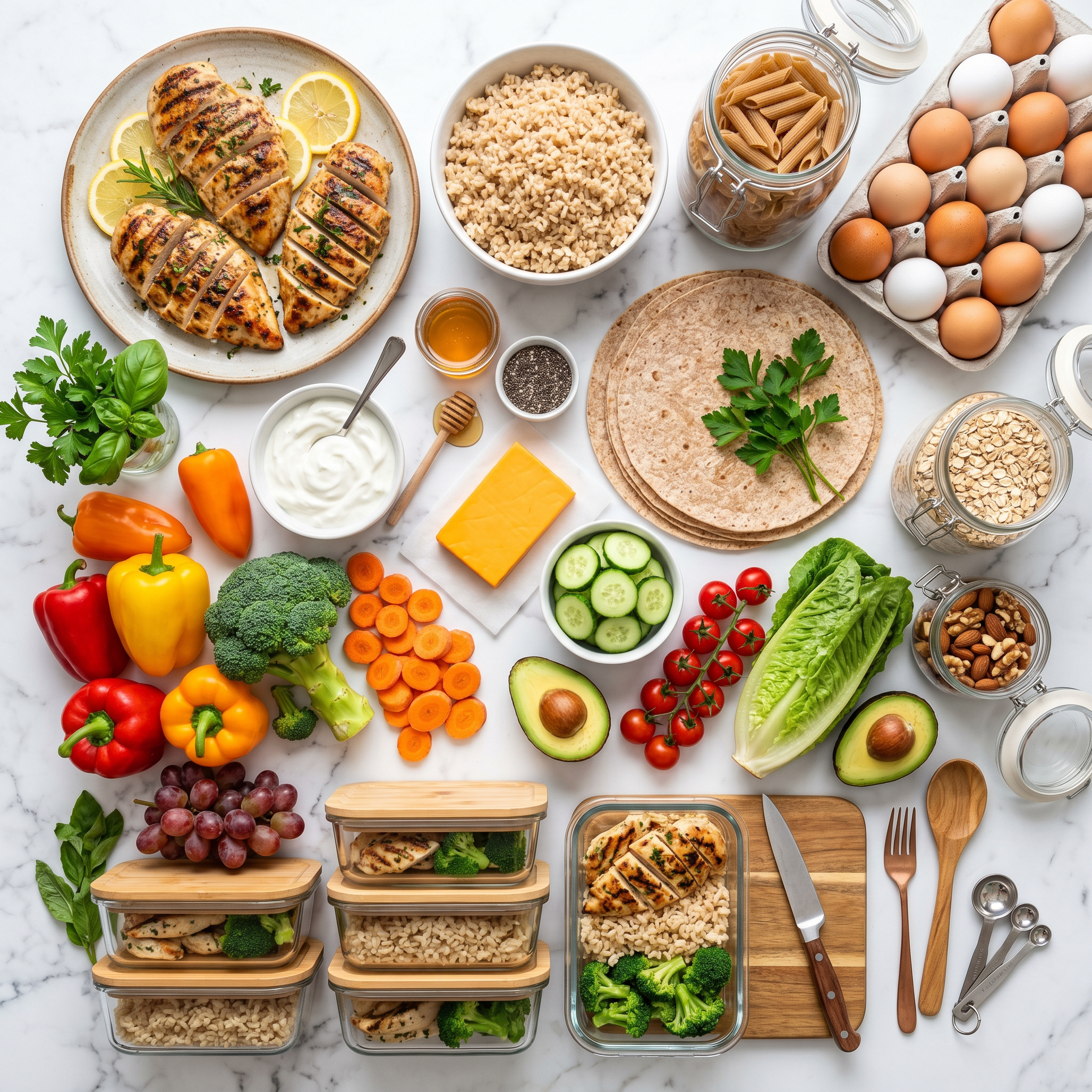
Here is the exact beginner plan and how to execute it in one 30-minute session:
Essential Containers for Beginners
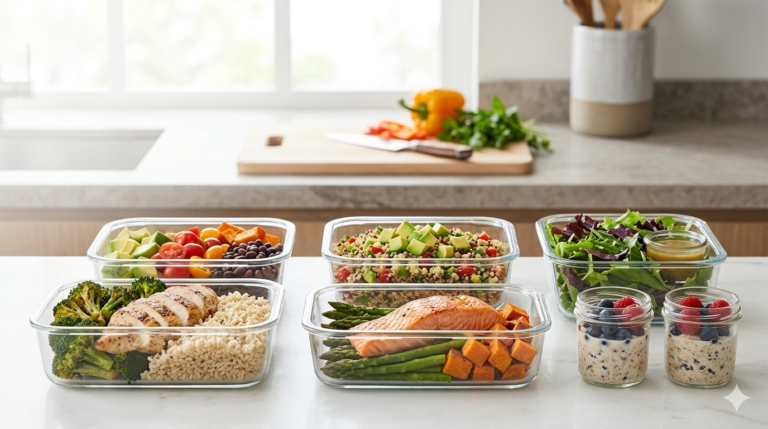
You do not need to invest in an expensive set of matching containers to get started. A mix of glass containers with snap-on lids, a few larger containers for bulk items like rice, and a set of smaller containers for snacks will cover almost every meal prep need. Glass is generally the best material since it does not absorb odors or stain, and it is safe to reheat in the microwave or oven without transferring any chemicals to your food.
What to Cook First as a Beginner
When you are just starting out, stick to simple, repeatable components rather than trying to prep five completely different recipes. The formula of one protein, one grain, and two vegetables is enough to create variety throughout the week by changing up your sauces and seasonings. Monday might be chicken and rice with roasted broccoli and a garlic sauce, while Wednesday uses the same base ingredients but with a teriyaki glaze, making everything feel fresh without extra work.
For more inspiration on what to prep, our 15 Meal Prep Ideas for Busy Families is packed with practical recipe suggestions that work perfectly within a 30-minute prep window.
How to Store and Reheat Your Prepped Meals
Properly stored meal prep containers will keep safely in the refrigerator for up to four days, according to storage guidance from FoodSafety.gov. For meals you will not eat within that window, portion them into freezer-safe containers immediately after prepping while everything is fresh, and freeze for up to two months. Label every container with the date so you always know what needs to be eaten first.
Common Beginner Mistakes to Avoid
- Trying to prep too many different recipes at once. Start with three to four simple components and build from there as your confidence grows
- Not accounting for sauce variety. The same chicken and rice eaten with the same sauce five days in a row is a recipe for burnout, so prep two or three sauces alongside your food
- Sealing containers while food is still hot. This traps steam, creates condensation, and speeds up spoilage significantly
- Skipping snack prep. Prepping grab-and-go snacks like hard boiled eggs, cut vegetables, and portioned nuts is just as important as prepping main meals
Frequently Asked Questions
What is the best day to meal prep?
Sunday is the most popular choice since it sets you up for the full work week, but any consistent day works. The most important thing is picking a day and sticking to it as a weekly habit.
Do I need any special equipment?
No special equipment is needed to get started. A basic oven, stovetop, cutting board, sharp knife, and a set of airtight containers are all you need for an effective beginner meal prep session.
How much money can meal prep save?
Studies suggest that meal prepping can save the average person $50 to $150 per month compared to eating out or buying convenience foods regularly, though the exact amount depends on your current spending habits and how consistently you prep.
Can I meal prep for just one person?
Absolutely, meal prep works especially well for individuals since a single batch of components covers all your meals for several days without requiring large quantities or complex planning.
Final Thoughts
Meal prepping as a beginner does not have to be complicated or time-consuming. With a simple 30-minute framework, the right containers, and a realistic starting plan, you can completely transform the way you eat during the week while spending less time in the kitchen overall. Start with just one prep session this week, keep it simple, and build your system from there.