The Science of Cooking: Why Heat Changes Food
Why Heat Is the Most Powerful Tool in Your Kitchen
The science of cooking is, at its core, applied chemistry, governed by the same physical laws of heat transfer described by the Encyclopedia Britannica. Every time you sear a steak, boil pasta, or bake a loaf of bread, you are triggering a cascade of chemical reactions that transform raw ingredients into something completely different in texture, flavor, color, and aroma. Understanding what heat actually does to food does not just satisfy curiosity, it makes you a noticeably better cook, because you start making decisions based on what is actually happening at a molecular level rather than just following steps blindly.
According to the ScienceDirect food science database, heat-driven reactions are responsible for the vast majority of the flavors and aromas we associate with cooked food. In this guide, we will break down exactly what happens to proteins, sugars, fats, and water when heat enters the picture, and how you can use that knowledge to cook smarter, not harder.
The Maillard Reaction: Where Flavor Is Born
If you have ever wondered why a seared steak tastes so much more complex than a boiled one, the answer lies in the Maillard reaction. This is a chemical reaction between amino acids (from proteins) and reducing sugars that occurs when food is heated above roughly 280°F (140°C). It is responsible for the deep brown crust on a steak, the golden color of toasted bread, and the rich aroma of roasted coffee.
The Maillard reaction does not happen in boiling water, since water keeps the surface temperature capped at 212°F (100°C), well below the threshold needed. This is exactly why dry-heat cooking methods like searing, roasting, and grilling produce so much more flavor than boiling or steaming.
How to Maximize the Maillard Reaction:
- Dry your food thoroughly before cooking. Excess surface moisture has to evaporate before browning can begin, wasting valuable time and heat
- Use high, dry heat like a hot skillet, grill, or oven roasting rather than steaming or boiling
- Do not overcrowd the pan. Too much food at once traps steam and lowers the surface temperature, preventing proper browning
- Add a touch of sugar when appropriate, since sugars accelerate the reaction (this is part of why a light dusting of sugar helps caramelize roasted vegetables)
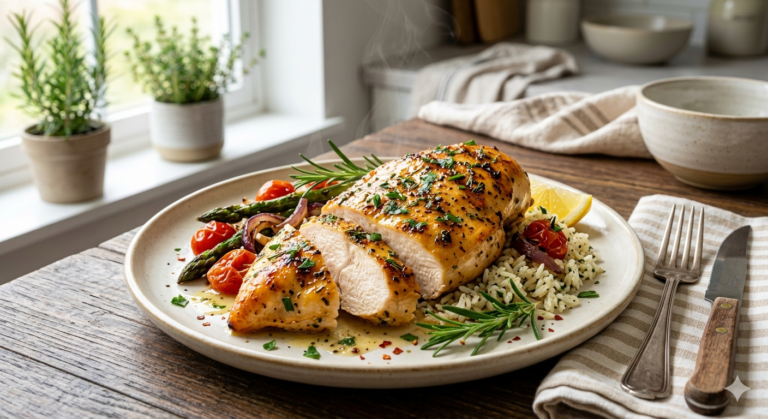
You can see the Maillard reaction in action in our Grilled Chicken with Sweet Potato Fries and Avocado Salsa, where the high, dry heat of the grill creates that signature charred, flavorful crust.
Caramelization: The Sweet Side of Heat
While the Maillard reaction involves both proteins and sugars, caramelization is what happens when sugars are heated on their own, typically starting around 320°F (160°C). This is the process behind caramel sauce, the sweet golden edges of roasted onions, and the deep flavor of a properly browned onion that has been cooked low and slow for 30 minutes or more.
Caramelization breaks sugar molecules down into hundreds of new compounds, creating flavors that range from nutty and buttery to slightly bitter, depending on how far the process is taken. This is why a slowly caramelized onion tastes completely different from a raw one, even though no other ingredient has been added.
How Heat Transforms Proteins
Proteins are long chains of amino acids folded into specific three-dimensional shapes. When heat is applied, those folded structures begin to unravel in a process called denaturation. This is why a raw egg white is clear and runny, but turns white and firm once cooked. The proteins have unfolded and then re-bonded with each other in a new structure.
Key Protein Temperature Thresholds:
- Egg whites begin to set around 144 to 149°F (62 to 65°C)
- Egg yolks begin to thicken around 149 to 158°F (65 to 70°C)
- Meat proteins like myosin start denaturing around 122°F (50°C), while collagen begins breaking down into gelatin above 140°F (60°C)
- Fish proteins are more delicate and fully denature at lower temperatures than red meat, which is why fish overcooks so much faster
This is also why slow cooking methods work so well for tough cuts of meat. Low, sustained heat over several hours allows tough collagen to slowly convert into gelatin, making the meat tender, while high, fast heat would just dry it out. Our Crockpot Garlic Parmesan Chicken and Potatoes is a perfect real-world example of this slow, gentle denaturation process at work.
What Happens to Fats When You Cook
Fats behave very differently from proteins and sugars under heat. Rather than transforming chemically right away, fats primarily melt and carry flavor, acting as a medium that distributes heat evenly across food and helps dissolve fat-soluble flavor compounds from herbs and spices.
Every fat also has a smoke point, the temperature at which it begins to break down and produce visible smoke along with bitter, acrid flavors and potentially harmful compounds. The Penn State Extension notes that choosing an oil with an appropriate smoke point for your cooking method is essential for both flavor and food safety. Refined oils like avocado and peanut oil tend to have much higher smoke points than delicate, unrefined oils like extra virgin olive oil, making them better suited for high-heat searing and frying.
Why Water Changes Everything
Water plays a massive role in how heat moves through food. Because water has a high specific heat capacity, it takes a relatively large amount of energy to raise its temperature, which is why a pot of water takes so long to boil compared to how quickly a dry pan heats up.
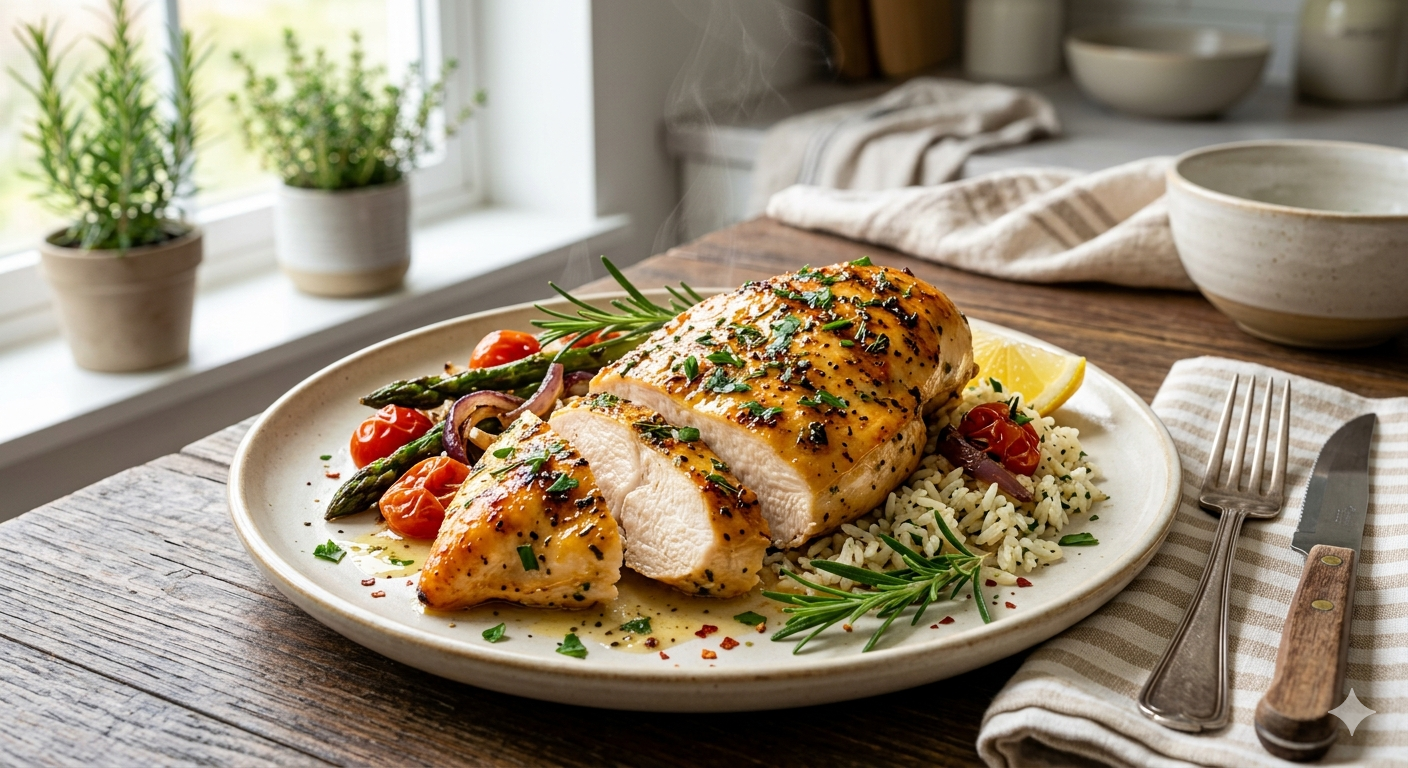
This is also why moist-heat cooking methods like boiling, steaming, and braising are naturally capped at lower maximum temperatures (212°F at sea level) compared to dry-heat methods like roasting or frying, which can easily exceed 400°F. This single difference explains why boiled chicken never develops a crust, no matter how long you cook it, while roasted chicken browns beautifully within an hour.
Common Cooking Science Myths
- Myth: Searing meat seals in juices. In reality, searing creates flavor through the Maillard reaction, but it does not meaningfully prevent moisture loss
- Myth: All oils smoke at the same temperature. Smoke points vary dramatically between oils based on their refinement level and fatty acid composition
- Myth: Boiling food longer always makes it more tender. Overcooking actually toughens many proteins, particularly lean meats and fish, by squeezing out too much moisture
- Myth: A rolling boil cooks food faster than a gentle simmer. Once water reaches boiling point, it cannot get any hotter, so a vigorous boil cooks food at the same temperature as a gentle one, just with more violent movement
Frequently Asked Questions
What is the difference between the Maillard reaction and caramelization?
The Maillard reaction involves both proteins and sugars reacting together, while caramelization involves only sugars breaking down on their own. Both create browning and complex flavors, but through slightly different chemical pathways.
Why does meat turn from red or pink to brown when cooked?
This color change is caused by the denaturation of a protein called myoglobin, which is responsible for the red color in raw meat. As it is heated, its structure changes and it can no longer hold onto oxygen the same way, resulting in the familiar brown color of cooked meat.
Does cooking destroy all the nutrients in food?
Not all nutrients are affected equally. Heat can reduce certain heat-sensitive vitamins like vitamin C and some B vitamins, but it can also make other nutrients, like the lycopene in tomatoes, more available for the body to absorb. Cooking is a tradeoff, not a simple loss.
Why do recipes rest meat after cooking instead of cutting immediately?
Resting allows the proteins that tightened during cooking to relax slightly and reabsorb some of the juices that were pushed toward the center of the meat during cooking, resulting in a noticeably juicier final result when sliced.
Final Thoughts
Understanding the science behind heat does not take the magic out of cooking, it enhances it. Once you understand why searing creates flavor, why slow cooking tenderizes tough meat, and why oils behave differently at high heat, you start cooking with intention instead of guesswork. The next time you are in the kitchen, pay attention to the sounds, smells, and colors changing in real time. You are not just following a recipe, you are watching chemistry happen right in front of you.